TickTick has now been around for nearly ten years. It has seen growing popularity, particularly in recent years, with the likes of Marques Brownlee championing it. It has constantly built on its rich feature set without falling into the trap of doing several things poorly rather than doing a few things well.
One of those feature sets, released in 2019, is habits. Habit tracking has become a lot more prominent lately, with many apps that specialise in habit tracking alone now on the market. TickTick is one of the only full-fledged productivity apps with a dedicated habit feature. Separating itself from the likes of Todoist and Microsoft To Do, unlike much of its competitors, TickTick’s free package isn’t aggressively restrictive. The majority of features are free, including habits.
How Does A Habit From A Task?
You could argue that a repeated task suffices as a habit, which technically is true, but they are inherently different. A task is something you need to get done – nothing else to it. On the other hand, a habit is a desired behaviour change. In turn, how you measure the results of a habit are intrinsically different:
Task: Is it done?
Habit: Have I done it today? How many days have I done it? What’s my current streak?
Therefore, having a different user experience for habits compared to tasks is fully justified. Setting up a repeated task to form a habit, as some other apps suggest you do, just doesn’t cut it.
“You do not rise to the level of your goals. You fall to the level of your systems.”
James Clear, Atomic Habits
Setting Up A Habit On TickTick
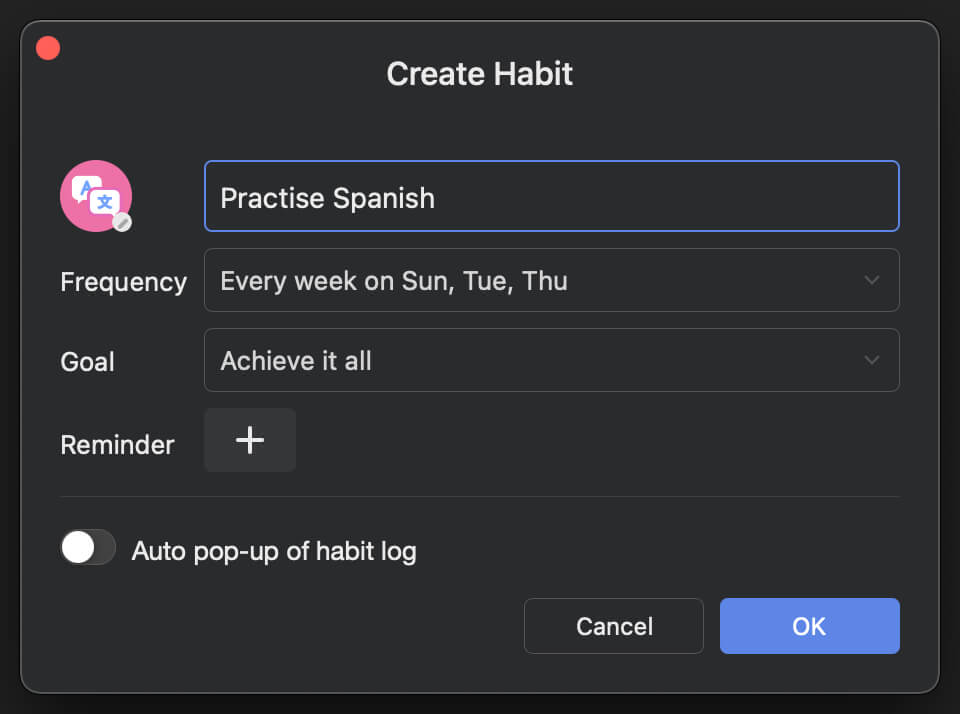
To create a habit in TickTick couldn’t be more straightforward. The principal aspect of the set-up is naming the habit you want to build and stating how frequently you want to do it as a minimum. If you need reminding, you can then set the app to do so at certain times.
Building The Habit
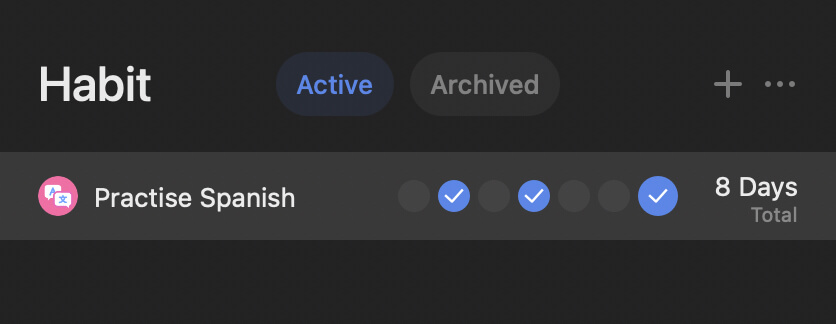
The habits screen is where TickTick comes into its own. When you land there, you will instantly get a list of your habits. Then to log a day, you just hit the icon for that habit. That’s it. All done for the day.
The check-in and streak analytics are where the habits separate themselves from the tasks in TickTick. Each habit gets its own dashboard displaying the headline statistics, a calendar showing all of your check-ins, your monthly check-in rate and any logs you have made throughout a month.

The gamification, especially within the streaks, helps build the momentum needed to form a genuine behavioural change. Seeing the statistics behind the habit you have started, holds you to account to keep moving forward.
TickTick Has A Habit Of Making It Easy
The great thing about TickTick is how well-supported it is across various platforms. It’s available on iOS, iPadOS, watchOS, macOS, Android, Windows and Linux. It also has a web app and a multitude of browser extensions and add-ons. All of this allows you to use TickTick in pretty much any workflow you have. For instance, there’s no need to pull out your iPhone to log something if you’re on your windows laptop.
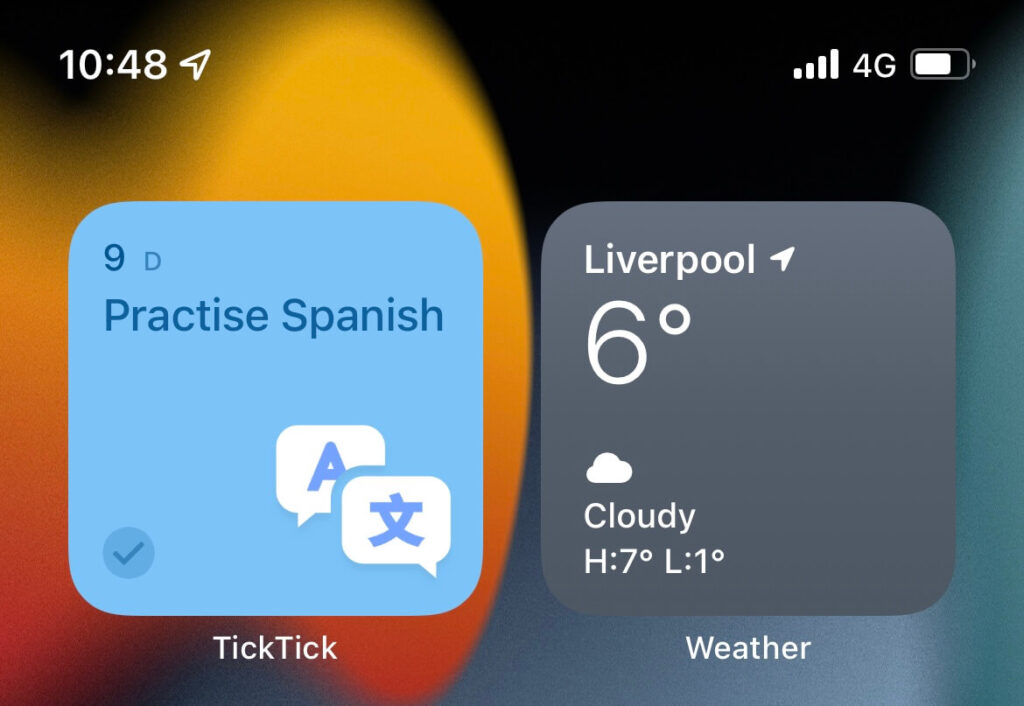
They couldn’t make it easier for you. With features such as iOS widgets available for you to both, be reminded of your goals and have quick access to log any progress.
TickTick Genuinely Works
I have used this feature to build up multiple habits for myself and have got real benefits as a result. In particular, I have used it for taking vitamins daily and reading more. Ultimately, it’s still up to you to do the actual action but having something in place that holds you to account and displays your progress genuinely motivates you to move forward.